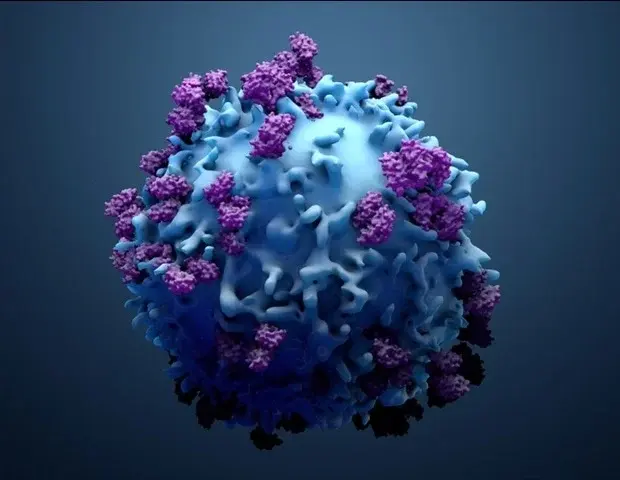
Human-Only CAR-T Design Cuts Antibody Reactions in Myeloma Trial
This strategy also reduces the chance that cancer cells escape by losing a
Researchers at Massachusetts General Hospital and Brigham and Women's Hospital tested a new CAR-T therapy called TriPRIL in patients with relapsed or refractory multiple myeloma. The trial enrolled 15 adults with advanced disease. Twelve of the 15 patients showed reduced or eliminated cancer markers after treatment. The therapy targets two proteins found on myeloma cells. The design uses a trimeric APRIL structure that binds both CD19 and BCMA simultaneously. This dual-target approach improves cell killing efficiency. The human-only protein construction was chosen to lower the risk of immune reactions against the drug itself. Dual-Target Strategy Boosts Efficacy TriPRIL was engineered to recognize two antigens at once. CD19 and BCMA are both expressed on malignant plasma cells. By binding both targets, the engineered T cells locate and destroy cancer cells more effectively than single-target therapies.
Health news
 Exercise and Mood: Italian Study Links Physical Activity to Lower Depression Symptoms
 Screen Time in Childhood Linked to Unexpected Cognitive Boost in Teens, 8‑Year Study Shows
 Workplace stress and anxiety are taking a heavy toll on employees, with one in three workers reporting that the strain is not easing
 Daily Food Habit Tied to Lower Risk of Anxiety and Depression
This strategy also reduces the chance that cancer cells escape by losing a single antigen. Why Human-Only Proteins Matter Using only human proteins in the CAR structure minimizes the immune system's recognition of the therapy as foreign. This reduces the formation of anti-drug antibodies. Lower antibody levels mean the therapy persists longer in the body. Extended persistence allows continuous cancer surveillance. What Patients Can Expect The study reported that 12 of 15 patients achieved meaningful responses. Some patients saw complete disappearance of detectable disease. Others showed significant tumor reduction. The human-protein design helped maintain therapeutic levels over time. Fewer patients developed antibodies that neutralized the drug. Frequently Asked Questions How does TriPRIL differ from standard CAR-T therapies? TriPRIL targets two antigens simultaneously and uses only human proteins. This dual-target design improves killing efficiency. The human-only construction reduces anti-drug antibody formation. What are the main benefits of the human-protein design?
It lowers the immune system's reaction to the therapy. This extends how long the engineered cells survive in the body. Longer persistence means sustained cancer control without repeated dosing. Is the therapy approved for general use? No. The results come from a first-in-human clinical trial. The study was conducted at Massachusetts General Hospital and Brigham and Women's Hospital. Further trials are needed before regulatory approval.