New immune cell clusters identified in type 1 diabetes research
Persistent Immune Memory Drives Chronic Inflammation
Researchers at the University of Florida have identified specific immune cell populations that may sustain the autoimmune attack characteristic of type 1 diabetes. The study highlights how these cells interact within the pancreas to maintain the disease state over time.
Health news
 IVF Births Linked to Higher Levels of Mobile DNA Elements
 Immune Aging Shows Two Acceleration Peaks at Ages 40 and 60
 Evipedia Expands Health Knowledge Through Hugging Face Integration
 Memory Loss May Not Be the First Dementia Warning Sign
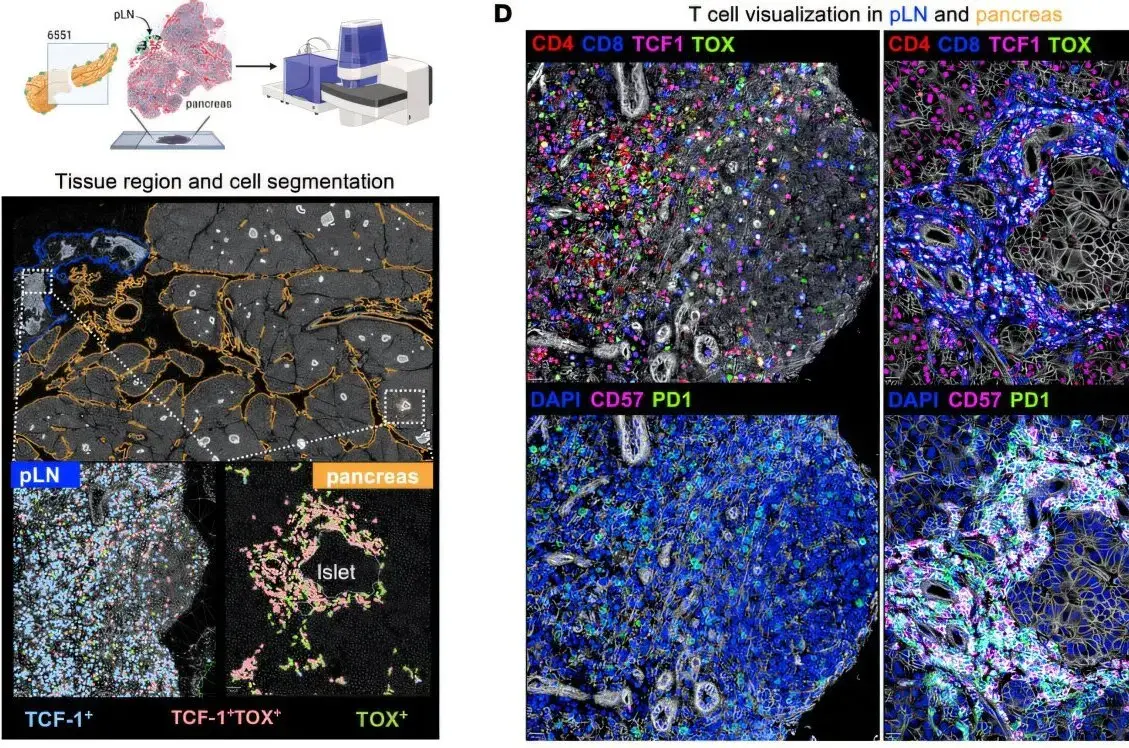
The team focused on a distinct group of immune cells known as TCF1+TOX+ cells. These cells were found to cluster together in the peri-islet areas of the human pancreas. This location is critical because it surrounds the insulin-producing beta cells. Understanding this spatial arrangement helps explain why the autoimmune response persists rather than resolving quickly.
Type 1 diabetes does not develop instantly. It is a gradual process where the immune system slowly destroys insulin-producing cells. The newly identified cells appear to act as a reservoir for this ongoing attack. They likely provide the necessary signals to keep the inflammatory response active. This finding shifts the focus from the initial trigger to the maintenance phase of the disease. By targeting these specific clusters, therapies might be able to halt the progression before total beta-cell loss occurs.
Can Targeting Specific Cell Clusters Halt Progression?
The study utilized advanced imaging and molecular analysis to map these cell populations. The researchers observed that TCF1+TOX+ cells co-localize with other immune components near the islets. This proximity suggests a direct interaction that fuels chronic inflammation. The work was published in the Journal of Clinical Investigation, providing high-resolution data on human tissue samples. These insights are crucial for developing targeted interventions that address the root cause of sustained autoimmunity.
Current treatments for type 1 diabetes primarily manage blood sugar levels after diagnosis. They do not stop the underlying immune destruction. If clinicians can identify and modulate these specific cell populations early, they might preserve remaining beta cells. This approach could delay or prevent the need for lifelong insulin injections. The identification of a stable cellular niche offers a new therapeutic target for clinical trials.
The implications extend beyond immediate treatment strategies. Understanding how these cells sustain the attack provides a clearer roadmap for prevention. Future studies will likely explore drugs that disrupt the TCF1+TOX+ cell network. This could lead to personalized medicine approaches based on individual immune profiles. As research continues, the goal remains to interrupt the autoimmune loop while the pancreas still has functional capacity.
Frequently Asked Questions
What specific cells did the researchers identify? The study identified TCF1+TOX+ cell populations. These cells form clusters in the peri-islet regions of the pancreas and contribute to sustaining the autoimmune response in type 1 diabetes patients.
How does this change our understanding of the disease? It reveals that the disease is maintained by specific localized immune communities rather than a random attack. This highlights the importance of cellular memory and spatial organization in chronic inflammation.
Does this offer an immediate cure for patients? While not an immediate cure, it provides a new target for therapy. Intervening at this stage could potentially slow disease progression and preserve insulin production for longer periods.
Content written by Medical Xpress for wellness-bio-radar.com editorial team, AI-assisted.