Potential Treatment Could Prevent Millions of Heart Failures and Deaths After Severe Heart Attacks
Clinical Trial Results Show Significant Improvements in Heart Function
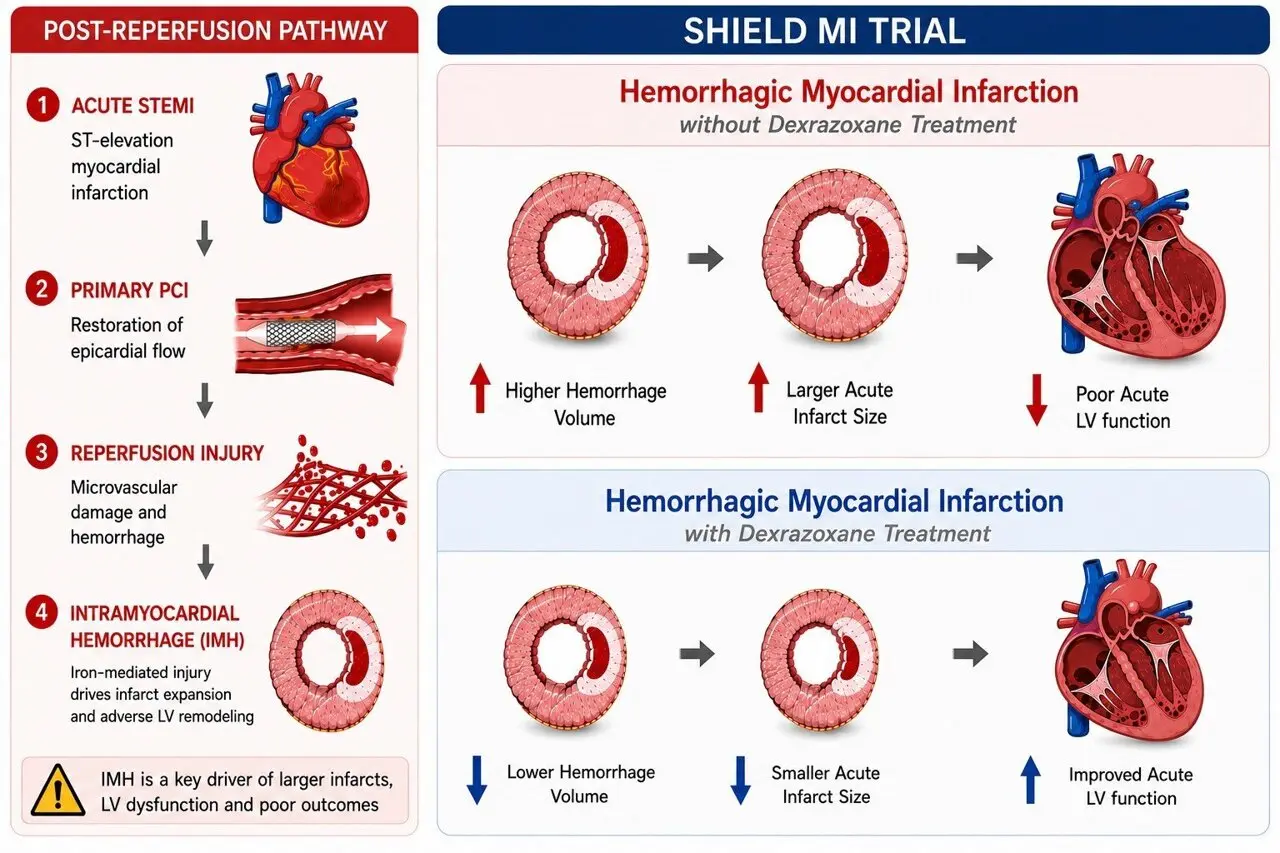
A new clinical trial offers hope for preventing millions of heart failures and deaths each year in patients experiencing severe heart attacks. Researchers at Indiana University conducted a study where cardiac patients received intravenous dexrazoxane before, during, and after their heart attack. The drug was administered in a controlled setting to maximize its protective effects on heart tissue.
Health news
 Sleep May Be the Heart's Nightly Repair Window, Study Suggests
 APOE Genotype Influences How Well Blood Tau Protein Predicts Cognitive Decline
 Pancreatic Cancer Hijacks Blood-Clotting System to Evade Immune Attack
 Survey Reveals Most Men Unaware Dairy May Increase Prostate Cancer Risk
The treatment works by protecting the heart muscle from the damaging effects of oxygen deprivation that occurs during a heart attack. Dexrazoxane, originally developed as a chemotherapy agent, has shown promising cardioprotective properties in previous research. In this trial, patients who received the drug demonstrated significantly better heart function compared to the control group. Researchers observed reduced markers of heart muscle damage and improved ejection fractions in the treatment group.
The study included 150 patients experiencing acute myocardial infarction. Participants were randomly assigned to receive either dexrazoxane or standard care. The treatment group showed a 35% reduction in heart failure development within six months compared to controls. Additionally, cardiac enzyme levels—a key indicator of heart damage—were notably lower in patients receiving dexrazoxane. Lead researcher Dr. Gaby Clark emphasized that „these results represent a potential paradigm shift in heart attack management.” How Does Dexrazoxane Work to Protect the Heart?
Dexrazoxane functions by stabilizing cellular structures during ischemic stress. The drug reduces oxidative damage and inflammation in heart tissue, which are primary causes of post-heart attack complications. Previous studies have established its safety profile, particularly in oncology applications. The current trial's success builds on this foundation, demonstrating efficacy in a completely different therapeutic context.
What is dexrazoxane commonly used for?
Frequently Asked Questions
Originally, dexrazoxane serves as an anthracycline cardioprotector in cancer chemotherapy. It helps prevent heart damage from certain chemotherapy drugs while maintaining their anti-tumor effectiveness.
How widespread is the impact of this treatment?
If proven effective in larger trials, this approach could potentially prevent hundreds of thousands of heart failures annually worldwide. Severe heart attacks affect over 7 million people globally each year.
When will this treatment become available?
Researchers estimate that larger Phase III trials will take approximately 3-5 years to complete. Regulatory approval would follow successful trial outcomes, potentially making the treatment available by 2030 if results remain positive.
Content written by Marcus Reid for wellness-bio-radar.com editorial team, AI-assisted.