
Revolutionary DNA Test Boosts Rare Disease Diagnosis
Decoding the Genetic Code
Researchers at Radboud University have developed a new DNA test that provides a more comprehensive picture of genetic material. The test, known as long-read genome sequencing, has already shown promising results in diagnosing rare diseases. It is being hailed as a potential game-changer in the field of genetic diagnostics.
Health news
 Voice Recording Predicts Age, Reveals New Biological Clock
 Popular Zero-Calorie Sweeteners May Pass Effects to Future Generations
 Movement Patterns Linked to Longevity
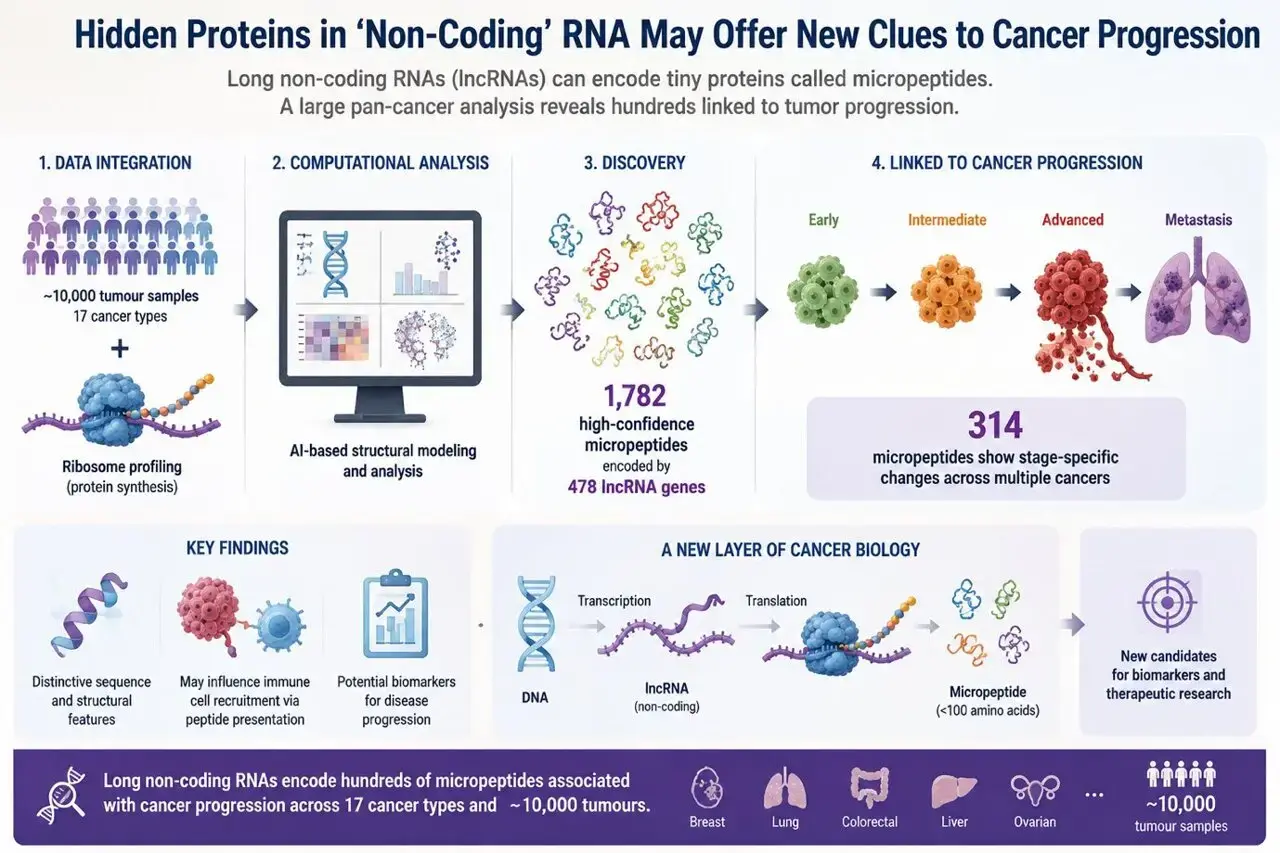 Hidden Proteins In Non-Coding RNA May Explain Cancer Spread
The new test works by reading longer stretches of DNA than current standard diagnostics, allowing for a more accurate identification of genetic mutations. This is particularly important for diagnosing rare diseases, which are often caused by complex genetic mutations that can be difficult to detect. Professor Alexander Hoischen is leading the research, using the long-read genome sequencing test to analyze DNA samples.
The long-read genome sequencing test has been shown to be highly effective in diagnosing rare diseases, with a significant increase in diagnosis rates. In one study, the test was able to diagnose conditions that had previously gone undetected. The test's ability to read longer stretches of DNA allows for a more detailed understanding of the genetic code.
Can This Test Replace Existing Diagnostics?
The new test has the potential to replace up to 15 other tests currently used to diagnose genetic disorders. This could simplify the diagnostic process and reduce costs. The researchers are now working to further develop the test and make it more widely available.
The introduction of this test could have significant consequences for the diagnosis and treatment of rare diseases. As the test becomes more widely available, it is likely to lead to more accurate and timely diagnoses, allowing for more effective treatment and improved patient outcomes.
Frequently Asked Questions
What is long-read genome sequencing? Long-read genome sequencing is a new DNA test that provides a more comprehensive picture of genetic material by reading longer stretches of DNA.
How does the test work? The test works by analyzing DNA samples using a specialized technology that allows for longer reads of genetic material.
What are the potential benefits of the test? The test has the potential to simplify the diagnostic process, reduce costs, and lead to more accurate and timely diagnoses of rare diseases.
Content written by Dr. Elena Voss for wellness-bio-radar.com editorial team, AI-assisted.