Simple urine test could improve kidney transplant decisions and save hundreds more donor kidneys
Currently, many donor kidneys are rejected based on crude assessments like age
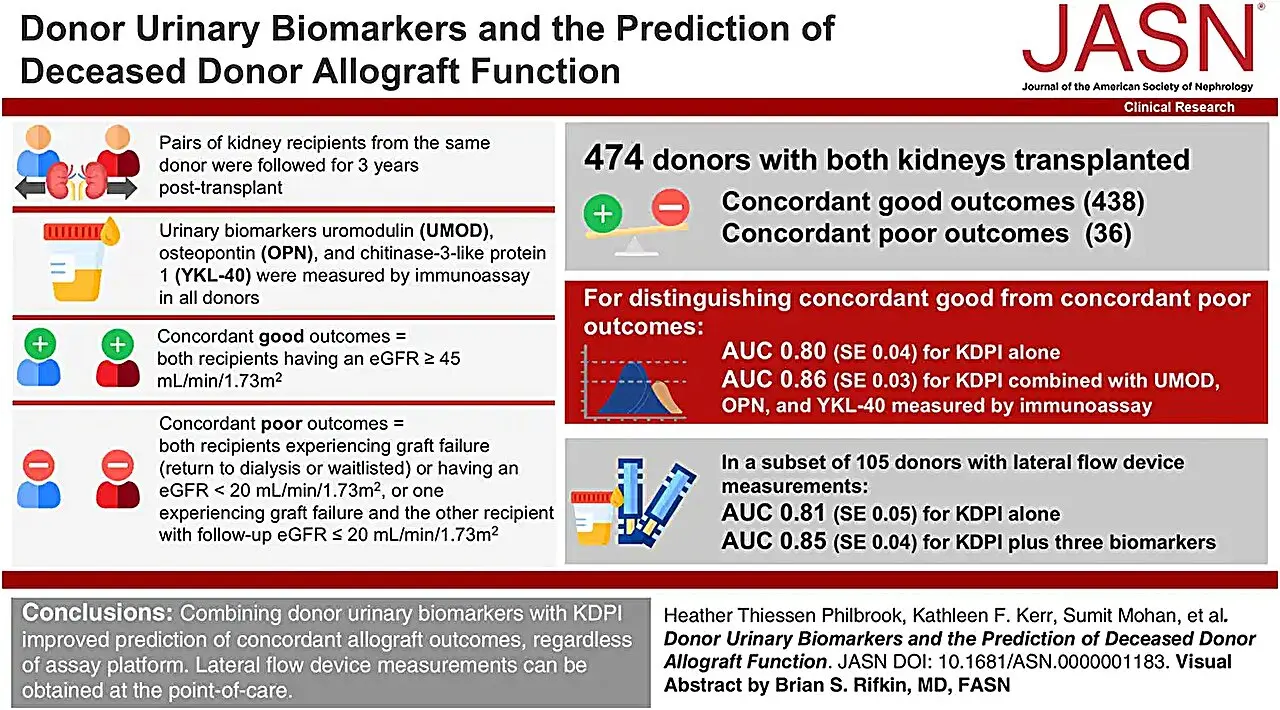
A new study from Johns Hopkins Medicine shows that a simple urine test can help doctors better assess donor kidney quality before transplant. The test measures specific biomarkers in urine that indicate how well a kidney might function after transplantation, potentially increasing the number of usable organs. The study focused on analyzing urine samples from deceased donors to detect early signs of kidney injury or stress. By identifying biomarkers such as neutrophil gelatinase-associated lipocalin (NGAL) and kidney injury molecule-1 (KIM-1), researchers could predict which kidneys were more likely to succeed in recipients. This approach allows transplant teams to make more informed decisions, reducing the risk of discarding organs that might still work well.
Health news
 Sleep May Be the Heart's Nightly Repair Window, Study Suggests
 APOE Genotype Influences How Well Blood Tau Protein Predicts Cognitive Decline
 Pancreatic Cancer Hijacks Blood-Clotting System to Evade Immune Attack
 Survey Reveals Most Men Unaware Dairy May Increase Prostate Cancer Risk
Currently, many donor kidneys are rejected based on crude assessments like age or blood tests alone, leading to avoidable waste. How the urine test changes donor evaluation Traditional methods rely heavily on donor history and basic blood work, which can overlook subtle damage. The urine test adds a direct measure of kidney stress, offering a real-time snapshot of organ health. In the study, kidneys with favorable biomarker profiles had significantly higher success rates post-transplant, even when coming from older donors or those with hypertension. This suggests the test could safely expand the pool of acceptable organs, particularly for marginal donors. Researchers estimate that widespread use could save hundreds of kidneys each year in the United States alone. Can this test reduce transplant waiting lists? By improving the accuracy of donor kidney assessment, the urine test may help lower discard rates and increase transplant availability.
More than 90,000 people in the U. S. are currently waiting for a kidney transplant, and thousands die each year before receiving one. If validated in larger trials, this low-cost, non-invasive tool could be integrated into routine organ evaluation protocols. Experts believe it could particularly benefit under-resourced hospitals that lack advanced imaging or biopsy capabilities. Frequently Asked Questions What does the urine test actually measure? It detects specific proteins like NGAL and KIM-1 that are released when kidney cells are injured or stressed, providing insight into the organ’s condition. Is the test expensive or complicated to perform? No, it uses standard urine samples and common laboratory techniques, making it affordable and easy to implement in most medical settings. How soon could this be used in hospitals? While further validation is needed, researchers say the test could be adopted within a few years if larger clinical trials confirm its benefits.
Content written by Claire Ashworth for wellness-bio-radar.com editorial team, AI-assisted.