Digital Brain Twin Recreates Brain Activity in Toddler with Autism
Unlocking Autism's Neural Mechanisms
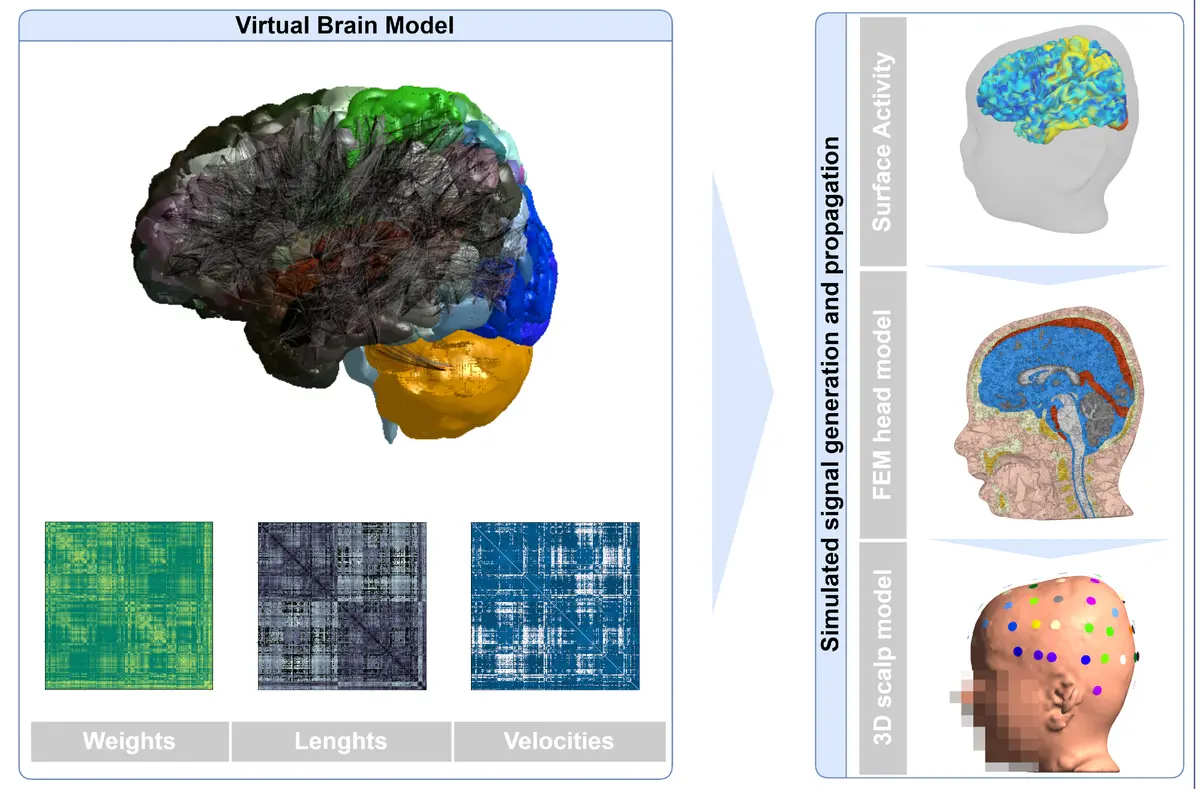
Researchers have developed a digital brain twin pipeline called FEDE, which combines MRI and EEG data to recreate brain activity. This innovation was applied to a toddler with autism, offering new insights into the condition. The study was published recently.
Health news
 Scientists Engineer Probiotic Bacteria to Target Pancreatic Tumors
 Research Reveals Impaired Brain Cell Growth in Adults with Depression
 AI Can Predict Vaccine Responses Before Administration
 Exploring Bryan Johnson's Quest for Immortality
By linking MRI anatomy with EEG dynamics, the FEDE model provides a detailed way to study how brain structure and neural activity interact in autism. The researchers aimed to better understand the neural mechanisms underlying the condition.
Can Digital Twins Revolutionize Autism Diagnosis?
The FEDE model uses MRI-derived anatomy and EEG-recorded neural activity to create a high-fidelity digital brain twin. This allows researchers to study the complex interactions between brain structure and function. The model's application to a toddler with autism revealed new details about the condition's neural characteristics.
The study's findings highlight the potential of digital brain twins to advance autism research. By recreating brain activity in individuals with autism, researchers can gain a deeper understanding of the condition's underlying mechanisms.
The development of FEDE raises questions about the potential for digital brain twins to improve autism diagnosis and treatment. While the study's results are promising, the researchers emphasize the need for larger validation studies to confirm their findings.
Frequently Asked Questions
The creation of digital brain twins like FEDE could lead to significant advances in autism research and treatment. As researchers continue to develop and refine this technology, it may become a valuable tool for understanding and addressing autism.
What is a digital brain twin? A digital brain twin is a computational model that recreates an individual's brain activity using data from MRI and EEG. How does FEDE work? FEDE combines MRI-derived anatomy with EEG-recorded neural activity to create a high-fidelity digital brain twin. What are the potential applications of digital brain twins in autism research? Digital brain twins may help researchers better understand the neural mechanisms underlying autism, potentially leading to improved diagnosis and treatment.
Content written by Dr. Nathan Cole for wellness-bio-radar.com editorial team, AI-assisted.