How Tiny Movements Reveal Deep Health Secrets
AI Decodes the Body’s Hidden Language
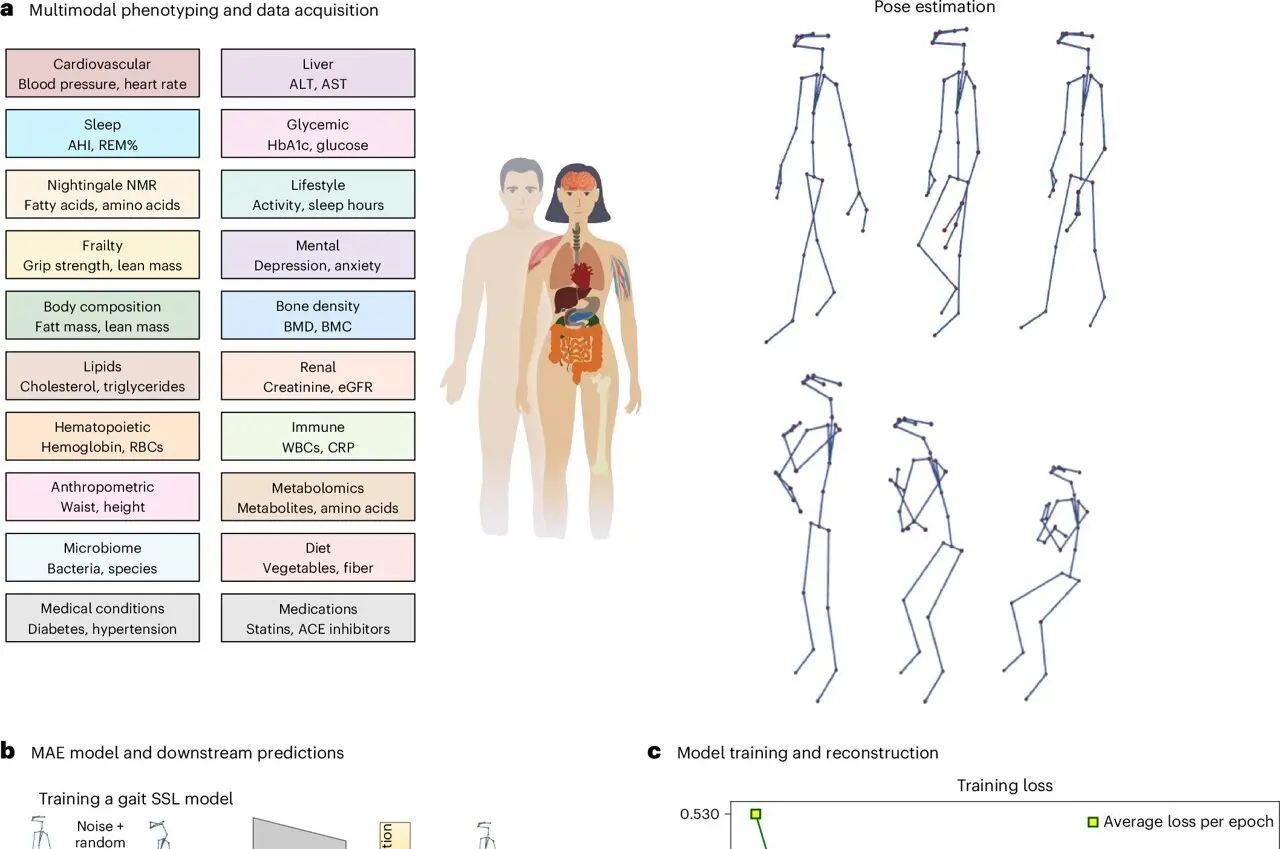
A team led by Newton Tech, a startup that builds AI for movement analysis, announced a new study in Nature Medicine that shows everyday human motion can predict a wide range of health markers. The research, conducted in collaboration with several academic hospitals, analyzed thousands of participants’ gait, posture, and subtle body motions over months. The findings suggest that wearable sensors and machine learning can uncover hidden physiological information without invasive tests.
Health news
 Exercise and Mood: Italian Study Links Physical Activity to Lower Depression Symptoms
 Screen Time in Childhood Linked to Unexpected Cognitive Boost in Teens, 8‑Year Study Shows
 Workplace stress and anxiety are taking a heavy toll on employees, with one in three workers reporting that the strain is not easing
 Daily Food Habit Tied to Lower Risk of Anxiety and Depression
The study used a large cohort of adults who wore unobtrusive motion trackers for up to a year. Researchers fed the raw sensor data into deep‑learning models that identified patterns linked to cardiovascular risk, metabolic health, and even early signs of neurological decline. The models achieved accuracy comparable to standard blood tests for several biomarkers, such as cholesterol levels and insulin sensitivity.
Can Wearables Replace Blood Tests?
By training on millions of movement samples, the AI learned to associate specific gait deviations with underlying health conditions. For example, a slight asymmetry in step length correlated strongly with elevated blood pressure, while tremors in hand movement predicted changes in blood glucose. The researchers highlighted that these associations were discovered without prior medical knowledge, relying purely on statistical learning.
„We’re essentially giving the body a voice,” said lead author Dr. Elena Martinez. „The AI listens to the subtle cues our muscles and joints give us and translates them into actionable health data.” The study also demonstrated that the models could detect changes over time, offering a dynamic view of a person’s health trajectory.
What Are the Next Steps for Clinical Adoption?
One of the key questions the research raises is whether continuous motion monitoring could reduce the need for frequent blood draws. The team compared the AI’s predictions with routine lab results and found a 90 % concordance for several key metrics. While the authors caution that the technology is not yet ready for clinical deployment, they argue that it could serve as a non‑invasive screening tool, especially in remote or resource‑limited settings.
The potential impact extends beyond diagnostics. By providing real‑time feedback, wearable devices could encourage healthier habits, such as better posture or more consistent activity, thereby preventing disease before it manifests. The study’s authors are now working on integrating their models into consumer fitness trackers, aiming for a broader public health application.
The researchers plan to conduct a prospective trial to validate the AI’s predictive power in a real‑world clinical environment. They also intend to refine the algorithms to account for demographic differences, such as age and ethnicity, ensuring equitable performance across diverse populations. Regulatory approval will require rigorous testing, but the early results are promising.
Frequently Asked Questions
Ultimately, the study suggests that the body’s subtle movements encode a wealth of health information that can be accessed non‑invasively. As wearable technology becomes more sophisticated, clinicians may soon have a new tool that turns everyday motion into a powerful health indicator.
Q: When might this technology be available for everyday use? A: While the research is promising, clinical validation and regulatory approval will take a few more years before it can be widely adopted.