
Microscopic peptide droplets reduce colorectal tumor growth in mice
How the peptide droplets work in tumor environments
Scientists from Nanyang Technological University in Singapore have created microscopic peptide droplets that deliver gene-silencing molecules into cancer and immune cells. The treatment reduced colorectal tumor growth by about 67 percent in mice. The research was published in September 2026 and offers a potential new approach for hard-to-treat cancers.
Health news
 Voice Recording Predicts Age, Reveals New Biological Clock
 Popular Zero-Calorie Sweeteners May Pass Effects to Future Generations
 Movement Patterns Linked to Longevity
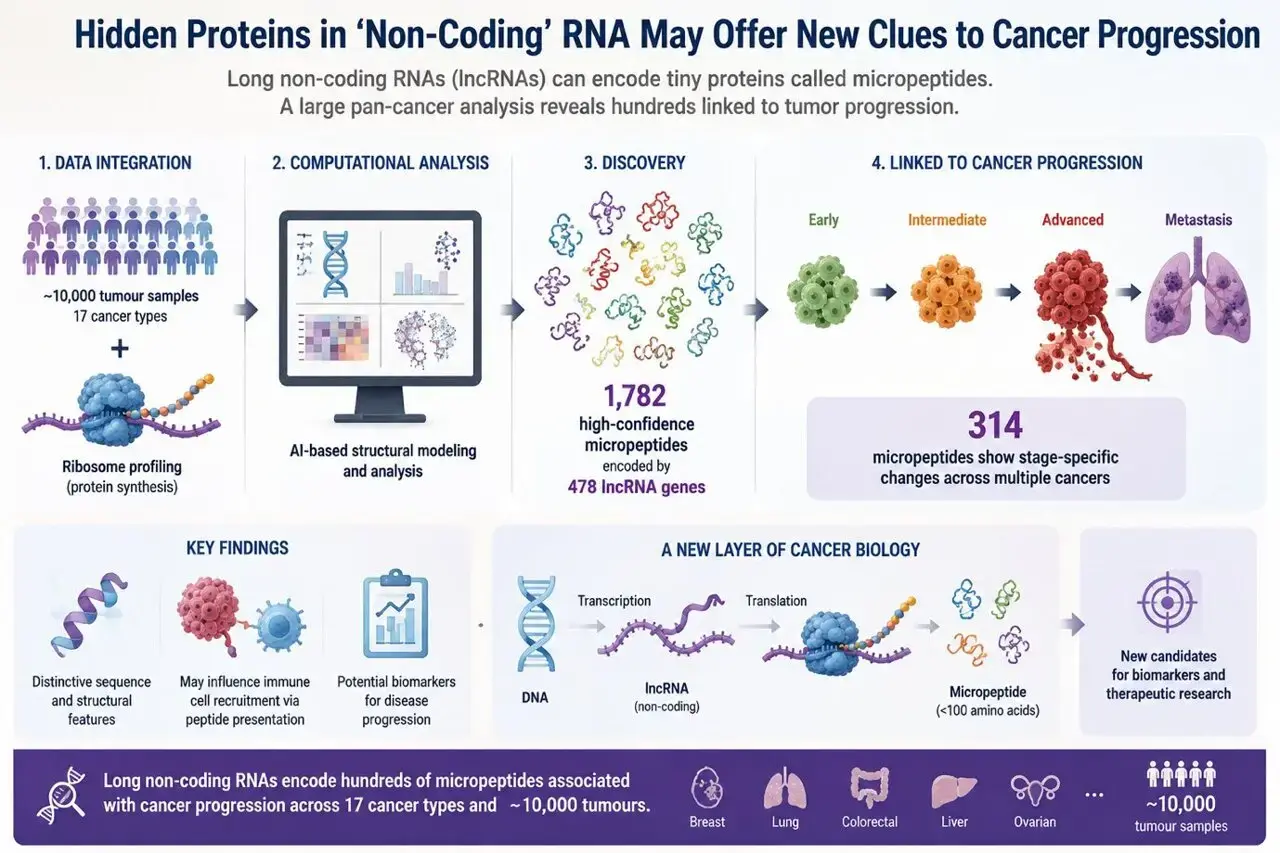 Hidden Proteins In Non-Coding RNA May Explain Cancer Spread
The droplets are designed to carry small interfering RNA, a type of molecule that can silence specific genes involved in tumor progression. By targeting both cancer cells and immune cells in the tumor microenvironment, the therapy aims to disrupt cancer growth while enhancing the body’s natural defenses. The peptide-based system allows for efficient cellular uptake and sustained release of the therapeutic payload.
Can this approach be adapted for other cancers?
The microscopic droplets are engineered from short chains of amino acids that self-assemble into nanoscale carriers. These carriers protect the gene-silencing molecules from degradation and help them penetrate deep into tumor tissue. In mouse models, the droplets successfully delivered their payload to colorectal cancer cells and tumor-associated macrophages, leading to reduced expression of genes linked to proliferation and immune evasion. Researchers observed a significant slowdown in tumor growth without noticeable toxicity in healthy tissues.
While the study focused on colorectal cancer, the delivery system is designed to be adaptable to different types of nucleic acid therapies. The peptide structure can be modified to target specific cell types or disease markers, suggesting potential applications in other solid tumors. However, further testing is needed to determine efficacy and safety in more complex models before human trials can be considered.
What are peptide droplets made of? The droplets are composed of short peptides, which are small chains of amino acids that naturally assemble into microscopic carriers capable of encapsulating therapeutic molecules.
Frequently Asked Questions
How much did tumor growth decrease in the study? In mice treated with the peptide droplets carrying gene-silencing molecules, colorectal tumor growth was reduced by approximately 67 percent compared to untreated controls.
Is this treatment ready for use in humans? No, the therapy has only been tested in mouse models so far. Additional preclinical studies are required to evaluate safety, dosage, and long-term effects before any clinical trials in humans can begin.
Content written by Dr. Nathan Cole for wellness-bio-radar.com editorial team, AI-assisted.