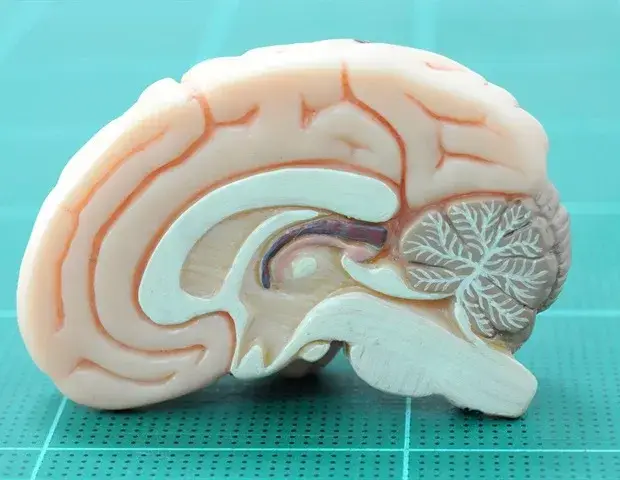
New Theory on Brain Waves Sheds Light on Cognition and Consciousness
How Do Brain Waves Influence Thought Processes?
A groundbreaking theory from the Picower Institute at MIT was published in The Journal of Neuroscience. Three researchers propose that the brain generates cognition and consciousness through traveling waves of rhythmic neural activity, which help to coordinate complex neural networks. This innovative research offers a fresh perspective on the mechanisms underlying thought processes and awareness. The scientists suggest that these rhythmic waves act as a conductor, orchestrating the activity of neurons to facilitate seamless communication within the brain.
Health news
 New Microscopy and AI Bring Hope for Early Detection of Neurological Diseases
 Harnessing the Heart's Natural Defense Against Heart Attack Damage
 Brain Scans Reveal Direct Fear Routes in Human Thalamus-Amygdala Pathways
 Ethical Decision-Making for Mental Health Professionals Using Large Language Models
The study highlights the importance of these traveling waves in maintaining cognitive functions. By synchronizing neural networks, the brain can process information more efficiently. The researchers conducted experiments that demonstrated how different patterns of neural activity correspond to various cognitive tasks. They found that when these waves are disrupted, cognitive performance can decline significantly.
Can This Theory Change Our Understanding of Consciousness?
The findings have implications for understanding neurological disorders. Conditions like epilepsy or schizophrenia may involve irregularities in these brain wave patterns. By exploring how these waves function, scientists hope to develop new therapeutic strategies to address cognitive impairments.
The theory also raises intriguing questions about the nature of consciousness itself. If cognition arises from rhythmic neural activity, what does that mean for our understanding of self-awareness? The researchers believe that this framework could lead to a more comprehensive model of consciousness, one that integrates both neural and psychological perspectives.
Looking ahead, the implications of this research could be vast. By unraveling the complexities of brain function, we may unlock new avenues for treating mental health issues and enhancing cognitive abilities. This theory not only deepens our understanding of the brain but also opens up exciting possibilities for future studies.
Frequently Asked Questions
What are traveling waves in the brain? Traveling waves are rhythmic patterns of neural activity that move through the brain, coordinating the function of different neural networks.
How does this theory relate to consciousness? The theory suggests that consciousness and cognitive processes are generated by these rhythmic waves, providing a new framework for understanding how we think and perceive.
Content written by Dr. Elena Voss for wellness-bio-radar.com editorial team, AI-assisted.