Sickle Cell Cure Rate Reaches 95% With New Transplant Method
Minimizing Transplant Risks
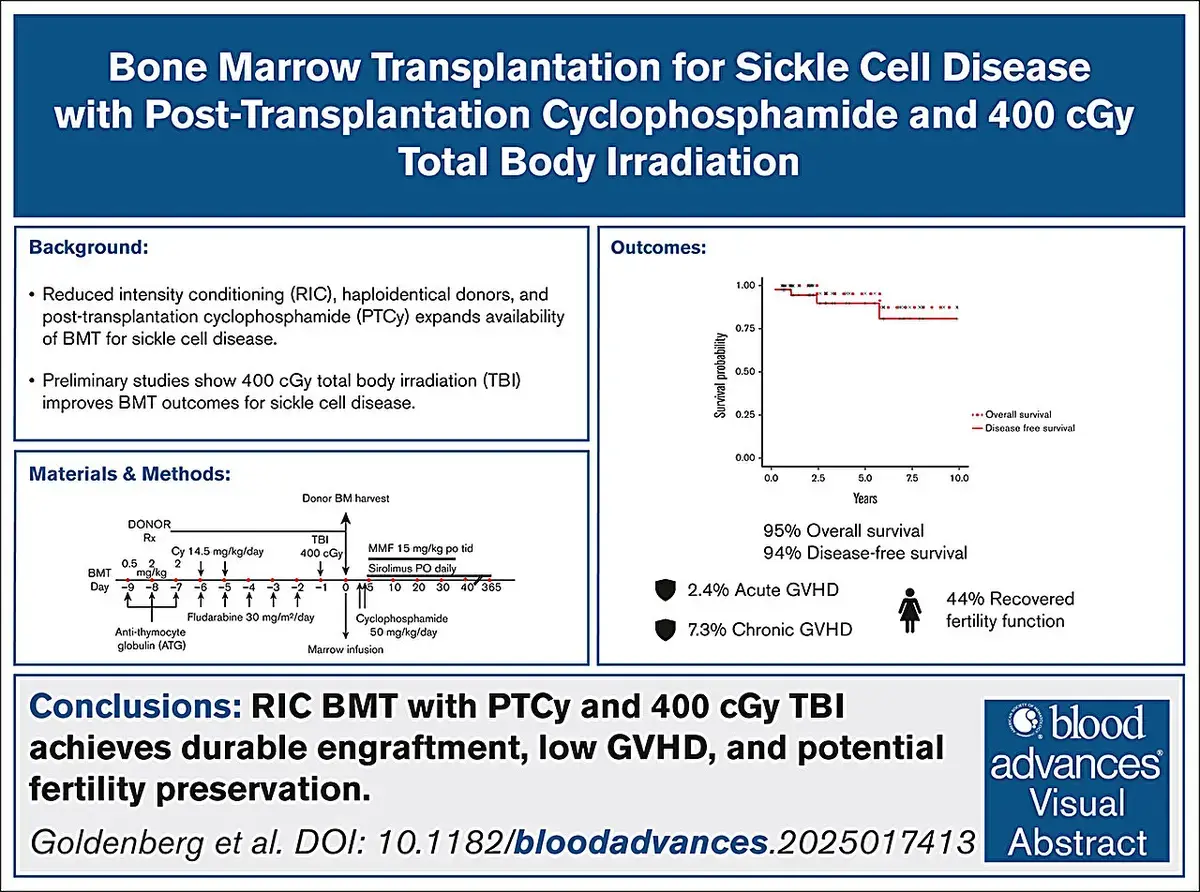
Johns Hopkins doctors report a 95% cure rate for sickle cell disease. They achieved this using a modified bone marrow transplant technique. The research took place at the Johns Hopkins University School of Medicine. This offers new hope for those suffering from this painful genetic condition.
Health news
 Sleep May Be the Heart's Nightly Repair Window, Study Suggests
 APOE Genotype Influences How Well Blood Tau Protein Predicts Cognitive Decline
 Pancreatic Cancer Hijacks Blood-Clotting System to Evade Immune Attack
 Survey Reveals Most Men Unaware Dairy May Increase Prostate Cancer Risk
The team developed a reduced-intensity conditioning (RIC) regimen. This prepares patients for a bone marrow transplant. Traditional transplants use high doses of chemotherapy and radiation. This can be dangerous, especially for adults. The RIC method uses lower doses, making it safer for a wider range of patients.
The key to success lies in carefully balancing immune suppression. The RIC regimen weakens the immune system just enough. This prevents rejection of the donor bone marrow. It avoids the severe side effects associated with stronger treatments. Researchers monitored patients closely for complications. They adjusted treatment as needed to ensure the best possible outcome.
Is a Universal Cure Possible?
This approach differs significantly from older methods. Previously, bone marrow transplants for sickle cell were often reserved for children. Adults faced higher risks of complications and transplant failure. The Johns Hopkins team’s work expands treatment options. It provides a viable path to a cure for adult patients.
The study involved a diverse group of patients. Participants ranged in age and disease severity. The 95% cure rate represents a significant improvement. It’s a major step forward in treating sickle cell disease. Doctors tracked patients for several years after transplant. They confirmed long-term disease-free survival in most cases.
„We’re seeing remarkable results,” said a researcher involved in the study. „Patients who were once burdened by chronic pain and frequent hospitalizations are now living normal, healthy lives.” The team is now focused on refining the technique. They aim to make it even safer and more accessible.
The success of this RIC regimen has broad implications. It suggests that bone marrow transplantation could become a standard treatment. This offers a potential cure for many sickle cell patients. Further research will explore ways to expand access to this life-changing therapy. It will also investigate the possibility of using gene editing alongside transplantation.
Frequently Asked Questions
What is sickle cell disease? Sickle cell disease is a genetic blood disorder. It causes red blood cells to become misshapen and break down. This leads to pain, anemia, and organ damage.
How does a bone marrow transplant cure sickle cell? A bone marrow transplant replaces the patient’s faulty bone marrow. It uses healthy bone marrow from a donor. This allows the body to produce normal, healthy red blood cells.
Is this treatment available to everyone? Currently, the transplant requires a matched donor. Finding a suitable donor can be challenging. Researchers are working to broaden donor availability and explore alternative therapies.
Content written by Marcus Reid for wellness-bio-radar.com editorial team, AI-assisted.