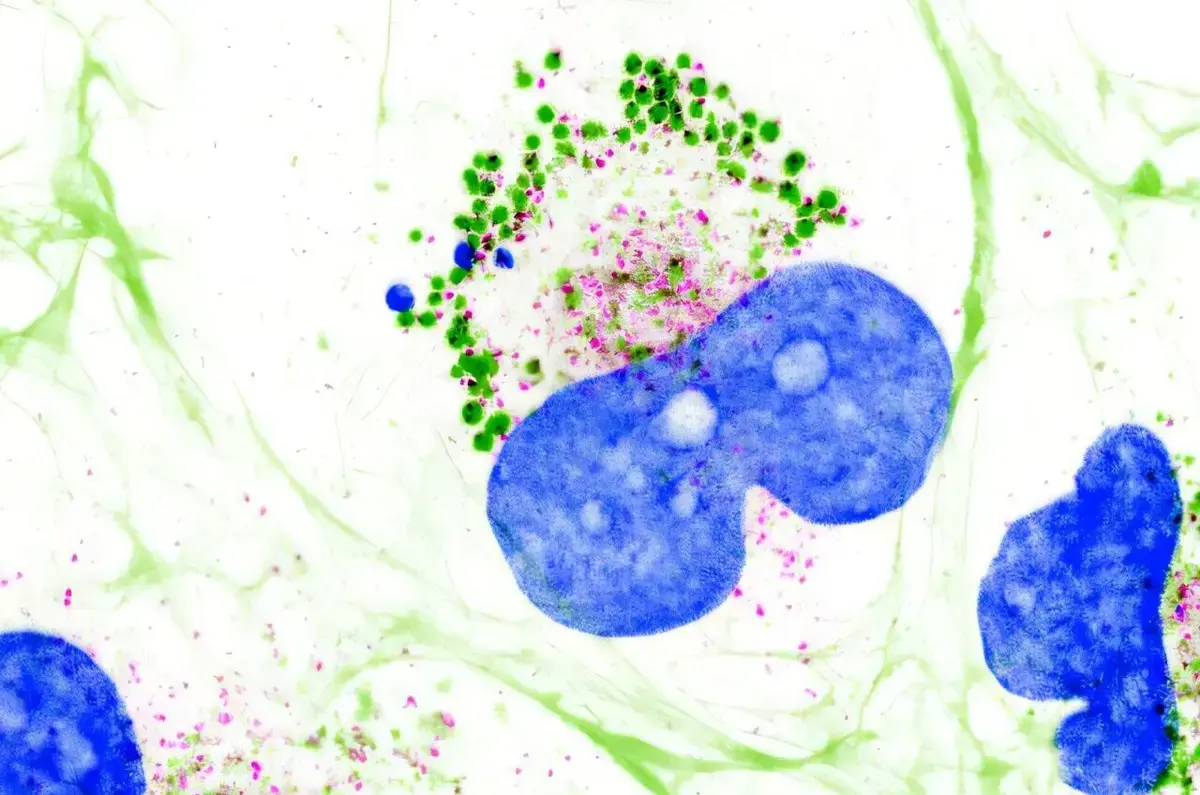
Collagen Found to be Liquid-Like Inside Cells
Rethinking Collagen's Structure
Researchers at the Center for Genomic Regulation have made a groundbreaking discovery about collagen, the human body's most abundant protein. Collagen is a crucial component of skin, bones, tendons, and organs. The study reveals a new understanding of collagen's behavior inside cells.
Health news
 Whey Protein Hydrolysate Rich in Tryptophan Peptides Reduces Anxiety and Improves Sleep
 Students Lagg Behind Seniors in Physical Activity, Study Shows
 Sleep May Be the Heart's Nightly Repair Window, Study Suggests
 APOE Genotype Influences How Well Blood Tau Protein Predicts Cognitive Decline
The traditional view of collagen as a long, rigid rod has been challenged by the new findings. Instead, collagen exists as a liquid-like droplet within cells. This discovery has significant implications for our understanding of how collagen is processed and assembled into its final form.
The researchers used advanced techniques to study collagen's behavior inside cells. They found that collagen molecules are able to flow and change shape, much like a liquid. This liquid-like state allows collagen to be easily transported and assembled into its final form.
How Does Collagen Solidify?
The study's findings raise important questions about how collagen transitions from a liquid-like state to its final rigid form. Further research is needed to understand the mechanisms behind this process. The researchers believe that understanding this process could have significant implications for our understanding of various diseases.
The discovery of collagen's liquid-like state inside cells has the potential to revolutionize our understanding of human biology and disease. It could lead to new insights into the causes of various conditions, such as skin disorders and musculoskeletal diseases.
Frequently Asked Questions
What is the significance of collagen's liquid-like state? This challenges the traditional view of collagen as a rigid rod.
How does collagen transition from a liquid-like state to its final form? The exact mechanisms behind this process are still unclear, but further research is underway to understand this transition.
What are the potential implications of this discovery?
Content written by Marcus Reid for wellness-bio-radar.com editorial team, AI-assisted.