Rapid Detection of Kidney Cancer with New PET Tracer
Improving Diagnostic Accuracy
Researchers have developed a new PET tracer that can detect kidney cancer with high precision and speed. The tracer targets carbonic anhydrase IX (CAIX), a protein often overexpressed in kidney cancer cells. This breakthrough was achieved by a team of scientists. The study's findings were recently reported.
Health news
 Sleep May Be the Heart's Nightly Repair Window, Study Suggests
 APOE Genotype Influences How Well Blood Tau Protein Predicts Cognitive Decline
 Pancreatic Cancer Hijacks Blood-Clotting System to Evade Immune Attack
 Survey Reveals Most Men Unaware Dairy May Increase Prostate Cancer Risk
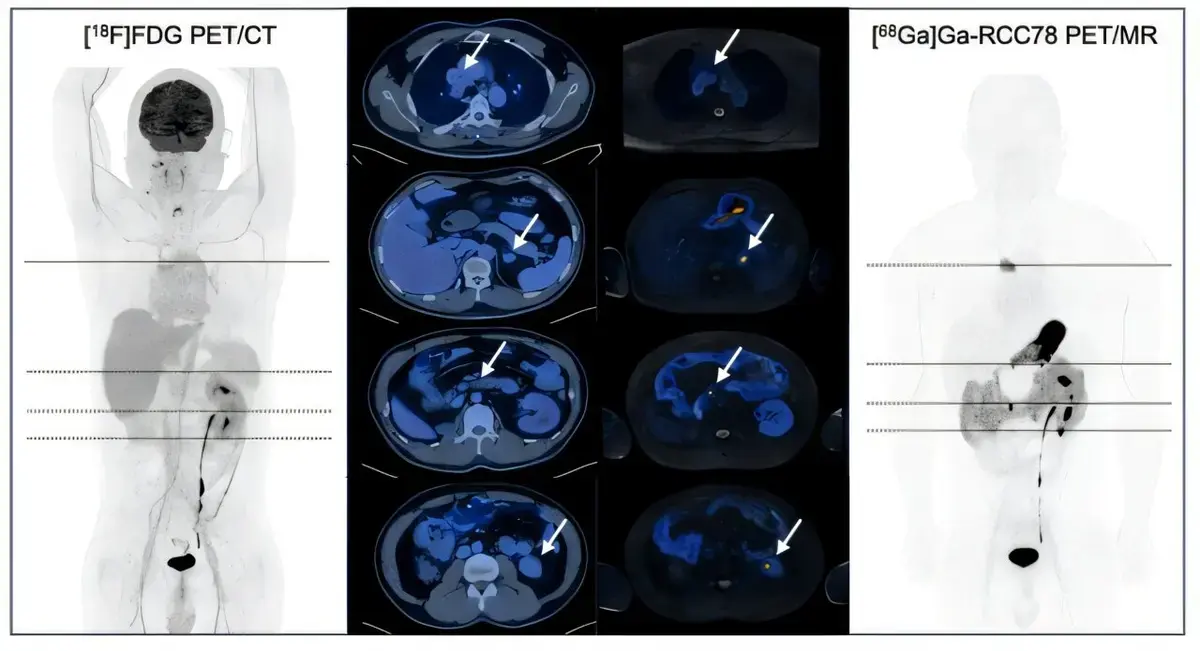
The new tracer, known as A68 Ga-RCC78, has shown exceptional sensitivity in detecting kidney cancer. It works by binding to CAIX, allowing for clear visualization of tumors. This is particularly useful for patients who have undergone surgery and are being monitored for recurrence. For instance, a PET scan using A68 Ga-RCC78 was performed on a patient four years after they had their right kidney removed.
The A68 Ga-RCC78 PET scan detected new nodules in the patient's lung, which were later confirmed to be metastatic kidney cancer. This level of precision is crucial for effective treatment planning. The tracer's ability to target CAIX specifically reduces false positives and provides a clearer picture of the disease's extent.
Can This Tracer Revolutionize Kidney Cancer Diagnosis?
The introduction of A68 Ga-RCC78 could significantly enhance the diagnosis and management of kidney cancer. By providing rapid and accurate detection, this tracer has the potential to improve patient outcomes. Its sensitivity and specificity may also reduce the need for additional diagnostic tests.
The development of this new PET tracer marks a significant advancement in the field of nuclear medicine. As research continues to refine this technology, it is likely to become an essential tool in the fight against kidney cancer.
Frequently Asked Questions
What is carbonic anhydrase IX (CAIX)? CAIX is a protein that is often overexpressed in kidney cancer cells, making it a useful target for diagnosis. It is not typically found in high levels in normal kidney cells.
How does the A68 Ga-RCC78 PET tracer work? The tracer binds to CAIX, allowing for clear visualization of kidney cancer tumors. This binding process enables doctors to detect cancer with high precision.
What are the potential benefits of using A68 Ga-RCC78? The tracer's high sensitivity and specificity may improve diagnosis and treatment planning for kidney cancer patients. It could also reduce the need for additional diagnostic tests.
Content written by Dr. Nathan Cole for wellness-bio-radar.com editorial team, AI-assisted.