IITGN Research Uncovers New Strategy Against Drug-Resistant Glioblastoma
A New Perspective in Combating Drug-Resistant Glioblastoma Explored by IITGN
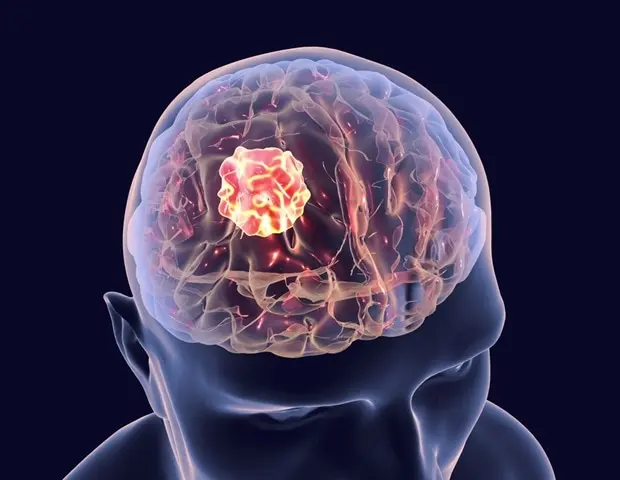
Oncogenic diseases pose a major worldwide threat. Over 300,000 new brain cancer cases are diagnosed annually globally. Glioblastoma is responsible for more than 250,000 annual deaths. Standard treatments rely on temozolomide (TMZ). However, tumor cells evolve, evading existing drugs. Finding innovative ways to target these malignant cells is a research priority.
Health news
 Exercise and Mood: Italian Study Links Physical Activity to Lower Depression Symptoms
 Screen Time in Childhood Linked to Unexpected Cognitive Boost in Teens, 8‑Year Study Shows
 Workplace stress and anxiety are taking a heavy toll on employees, with one in three workers reporting that the strain is not easing
 Daily Food Habit Tied to Lower Risk of Anxiety and Depression
Researchers at the Indian Institute of Technology Gandhinagar (IITGN) explored a potential path against drug-resistant glioblastoma. Their investigation highlighted two promising substances. These agents target the tyrosine-threonine kinase protein (TTK, or Mps1). TTK is vital for cell division. High TTK levels correlate with glioblastoma progression. These findings were published in the Journal of Biological Chemistry and RSC Medicinal Chemistry .
Understanding Cellular Processes
Genetic material distribution in biological cells is tightly regulated. TTK monitors a specific checkpoint. Its role is ensuring correct chromosome handling during cell division. If an error occurs, TTK triggers a safety mechanism. This pauses the process until necessary repairs finish. TTK then allows successful cell division. Cancer cells divide faster, heavily depending on TTK for survival in chaotic cycles.
Researchers asked: could disrupting this checkpoint hinder glioblastoma cells' ability to manage DNA damage? Preliminary data suggests this could lower viability. It might also boost responses to radiotherapy. Gaurav Rai, an author, noted, „Previous studies linked TTK involvement to TMZ resistance. We aimed to see if modifying a candidate from prior work, J54 (a selective TTK inhibitor), could improve targeting.”Gaurav is a PhD student in IITGN's Chemistry Department and a Prime Minister Research Scholar.
The labs confirmed one substance from over ten developed compounds. This substance was SPK17 (called G17 in the study). Compared to TMZ, the $\text{IC}_{50}$ (50% viability reduction) was much lower for LN229 cells (about 176 times lower) and U87MG cells (about 85 times lower). Notably, SPK17 caused an eight-fold stronger cell death signal at 10 micromolar versus 200 micromolar TMZ in TMZ-resistant LN229 cells ($\text{LN229-TMZ-R}$).
Identifying Promising Compounds
SPK17b (G17b) proved most remarkable among five tested compounds. It had an $\text{IC}_{50}$ of about 81 times lower for LN229 and 59 times lower for U87MG. Furthermore, the dose needed to trigger cell death in $\text{LN229-TMZ-R}$ cells was at least 59 times lower for SPK17b. Lower doses of SPK17 and SPK17b are needed to kill 50% of brain cancer cells compared to standard chemotherapy, suggesting a promising research direction.
Deepika, a co-author, added, „I observed that SPK17b not only slows glioblastoma proliferation but also appears to curb metastasis, a defining cancer trait.”In conclusion, these results show the two substances interfere with vital tumor survival and multiplication processes. Gaurav detailed the mechanism: „Both compounds target TTK, but the studies followed different outcomes of this blockade. SPK17 cancels an embedded pause, forcing division with unrepaired DNA damage, leading to cell death. SPK17b induces reactive oxygen species accumulation from cellular metabolism, overwhelming defenses and causing self-destruction. Surviving cells show reduced movement and tissue invasion.”