Mind-Controlled Extra Limbs Operate Without Disrupting Human Motion
The core mechanism bypasses traditional visual screens
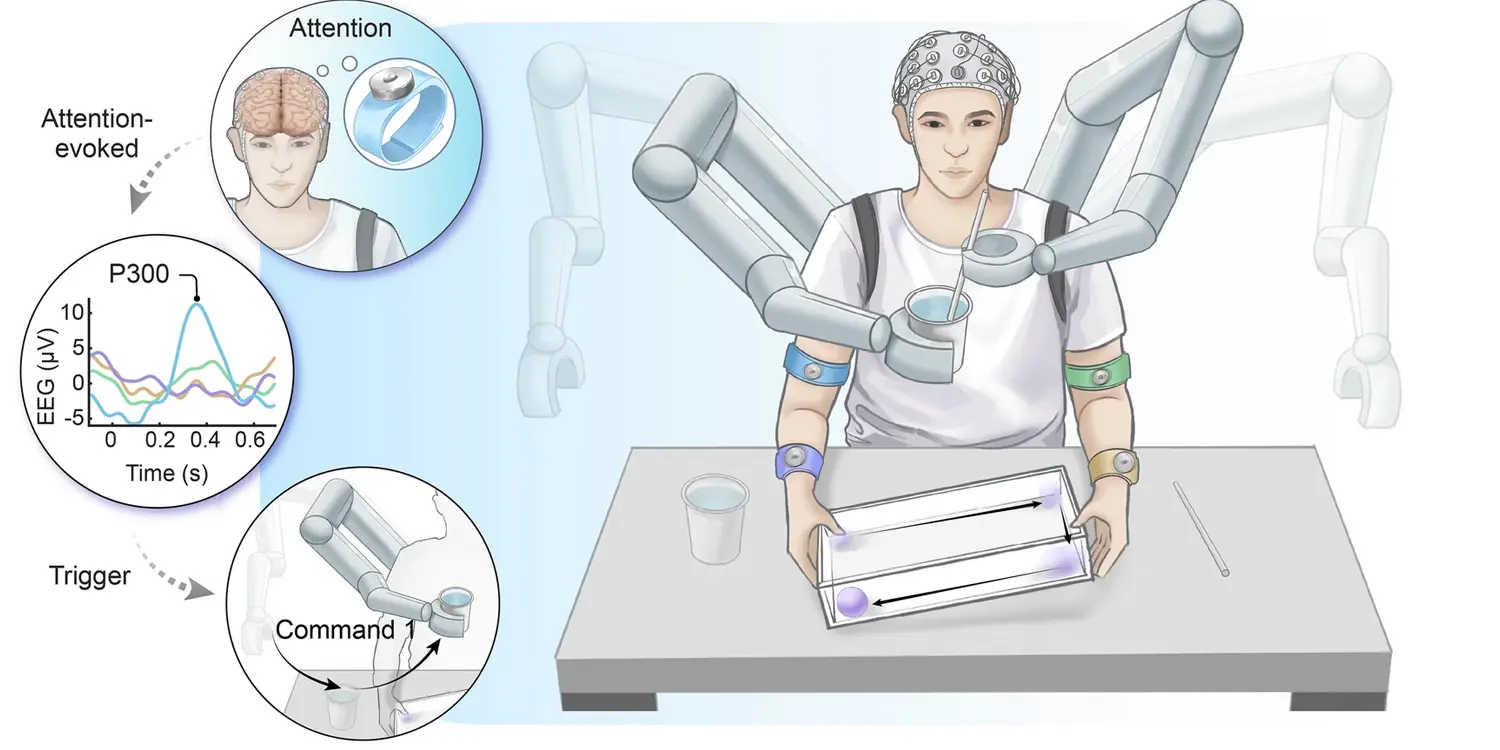
Researchers have successfully developed a groundbreaking brain-computer interface that allows individuals to command extra robotic arms. Published recently in Nature Communications, this innovative system reads touch-triggered brainwaves. Volunteers tested the technology while simultaneously using their own biological hands. The breakthrough occurred during a controlled experimental study examining multitasking physical capabilities.
Health news
 Exercise and Mood: Italian Study Links Physical Activity to Lower Depression Symptoms
 Screen Time in Childhood Linked to Unexpected Cognitive Boost in Teens, 8‑Year Study Shows
 Workplace stress and anxiety are taking a heavy toll on employees, with one in three workers reporting that the strain is not easing
 Daily Food Habit Tied to Lower Risk of Anxiety and Depression
The newly engineered interface relies on tactile stimulation to coordinate machine movements alongside human limbs. Participants concentrated their attention on brief vibrations delivered to various spots on their arms. These specific tactile cues generated distinct neural responses that the computer system translated into action. This method ensures that natural physical coordination remains completely uninterrupted during operation.
Decoding Tactile Neural Signals
The core mechanism bypasses traditional visual screens by utilizing the sense of touch. Users do not need to look at a control panel to issue commands. Instead, they focus mentally on the precise location of a physical vibration. The brain-computer interface decodes these sensory-triggered brainwaves almost instantaneously.
The system prevents mental exhaustion by distributing
Scientists noted that this approach significantly reduces the cognitive load typically associated with operating prosthetic devices. Human multitasking usually suffers when manual tasks demand continuous visual attention. By shifting the control schema to the somatosensory system, the extra robotic limbs function almost like natural biological extensions.
How Does Tactile Feedback Prevent Mental Overload?
The system prevents mental exhaustion by distributing sensory tasks across the skin's surface. Users recognize machine commands through localized vibrations rather than complex visual menus. This allows the human brain to process extra limb movements intuitively alongside everyday physical actions.
The successful demonstration marks a major milestone in augmenting human physical capabilities through neurotechnology. Future applications could assist individuals in complex industrial environments or medical settings. Researchers plan to refine the tactile decoding algorithms to support even more simultaneous robotic appendages.