Hidden Proteins In Non-Coding RNA May Explain Cancer Spread
Small Peptides Drive Aggressive Tumor Behavior
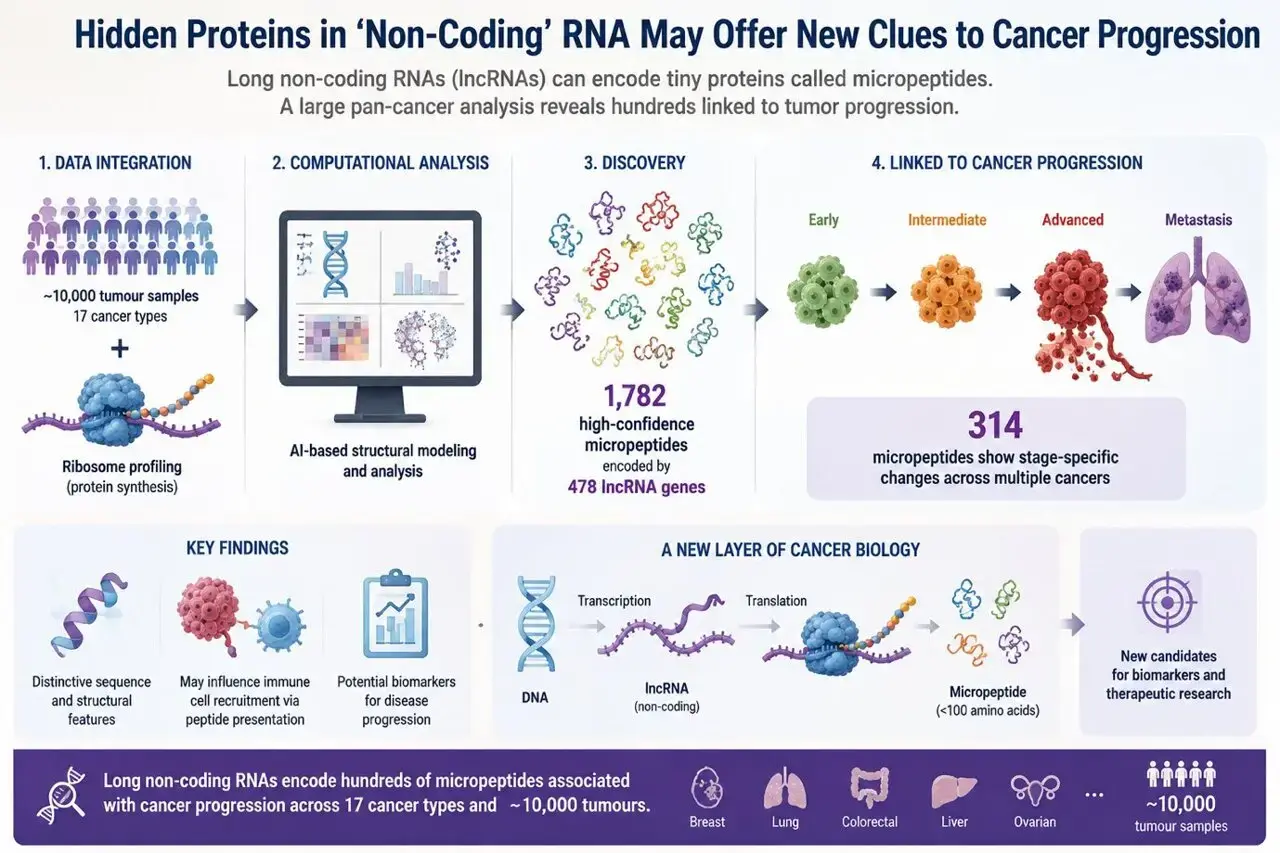
Researchers at the Hebrew University of Jerusalem have identified a new mechanism for cancer progression. They discovered that long non-coding RNA molecules can produce small proteins. These findings challenge decades of scientific consensus regarding gene expression. The study offers fresh insights into how tumors grow and metastasize. This breakthrough occurred after years of assuming these genetic regions were silent.
Health news
 Voice Recording Predicts Age, Reveals New Biological Clock
 Popular Zero-Calorie Sweeteners May Pass Effects to Future Generations
 Movement Patterns Linked to Longevity
 Continuous Glucose Monitoring Shows Trade‑Off Between Blood Sugar Control and Daily Well‑Being
For many years, scientists classified long non-coding RNA as non-protein-coding. They believed these sequences primarily regulated other genes without making their own structures. However, the new research reveals a hidden layer of biological activity. These molecules actually encode tiny proteins that influence cellular behavior. The team analyzed specific RNA strands found in aggressive cancer cells. Their work highlights a previously overlooked aspect of genetic function. This discovery shifts the focus toward these small peptides.
The study focused on a specific protein derived from a long non-coding RNA strand. Researchers found that this small peptide plays a critical role in cell division. It helps cancer cells maintain their ability to proliferate rapidly. Without this protein, the growth rate of tumor cells decreased significantly. The team used advanced sequencing techniques to map these hidden coding regions. They confirmed that ribosomes translate these RNA segments into functional amino acid chains. This process was not detected by standard genomic analysis methods. The presence of these peptides suggests complex regulatory networks.
Why Did Previous Studies Miss These Signals?
Cancer progression often involves changes in how cells communicate. These newly identified proteins act as key signaling molecules. They interact with existing pathways to promote survival and growth. Understanding this interaction provides a clearer picture of disease mechanics. The research team tested these findings in various cancer models. Consistent results emerged across different cell types. This consistency strengthens the argument for a universal role. The data indicates that targeting these proteins could halt progression.
Standard tools for identifying genes rely on specific start and stop signals. Long non-coding RNAs often lack these conventional markers. Consequently, automated algorithms frequently ignored these potential coding regions. Biologists assumed the absence of markers meant no protein production. This assumption persisted because verifying small peptides is technically difficult. The new approach used specialized ribosome profiling to detect translation. This method captures short-lived translation events that standard methods miss. The result revealed a vast library of hidden instructions. Many of these instructions are active in diseased tissues.
The implications for medical treatment are significant. Therapies could target these specific small proteins directly. Blocking their production might slow down tumor development. Researchers are now mapping these hidden codes in other diseases. The field of genomics must update its databases accordingly. Future studies will explore therapeutic applications of these findings. Clinical trials may eventually test inhibitors against these peptides. This shift represents a major step forward in precision medicine.
Frequently Asked Questions
Do all non-coding RNAs make proteins? No, not all long non-coding RNAs produce proteins. However, many likely contain hidden coding regions. Current estimates suggest a substantial portion remains undiscovered.
Can this finding cure cancer immediately? No, this is a foundational discovery rather than an immediate cure. It identifies new targets for drug development. Effective treatments require further testing in clinical settings.
How does this change genetic analysis? It requires scientists to look beyond standard gene definitions. New computational tools are needed to find these short peptides. This expands the known functional genome significantly.
Content written by Dr. Elena Voss for wellness-bio-radar.com editorial team, AI-assisted.