Immune Activation Key to Dual-Target CAR T Therapy Success in Glioblastoma
Can CAR T-Cell Therapy Overcome Glioblastoma's Defenses?
Researchers at the University of Pennsylvania's Perelman School of Medicine have been testing a new treatment for recurrent glioblastoma. The therapy involves injecting dual-target CAR T-cells directly into the brain.
Health news
 Sleep May Be the Heart's Nightly Repair Window, Study Suggests
 APOE Genotype Influences How Well Blood Tau Protein Predicts Cognitive Decline
 Pancreatic Cancer Hijacks Blood-Clotting System to Evade Immune Attack
 Survey Reveals Most Men Unaware Dairy May Increase Prostate Cancer Risk
The treatment is designed to target two proteins associated with glioblastoma, a highly aggressive form of brain cancer. By delivering the therapy directly into the cerebrospinal fluid, the researchers hope to overcome the blood-brain barrier that often limits the effectiveness of other treatments.
Will This Approach Lead to Lasting Remissions?
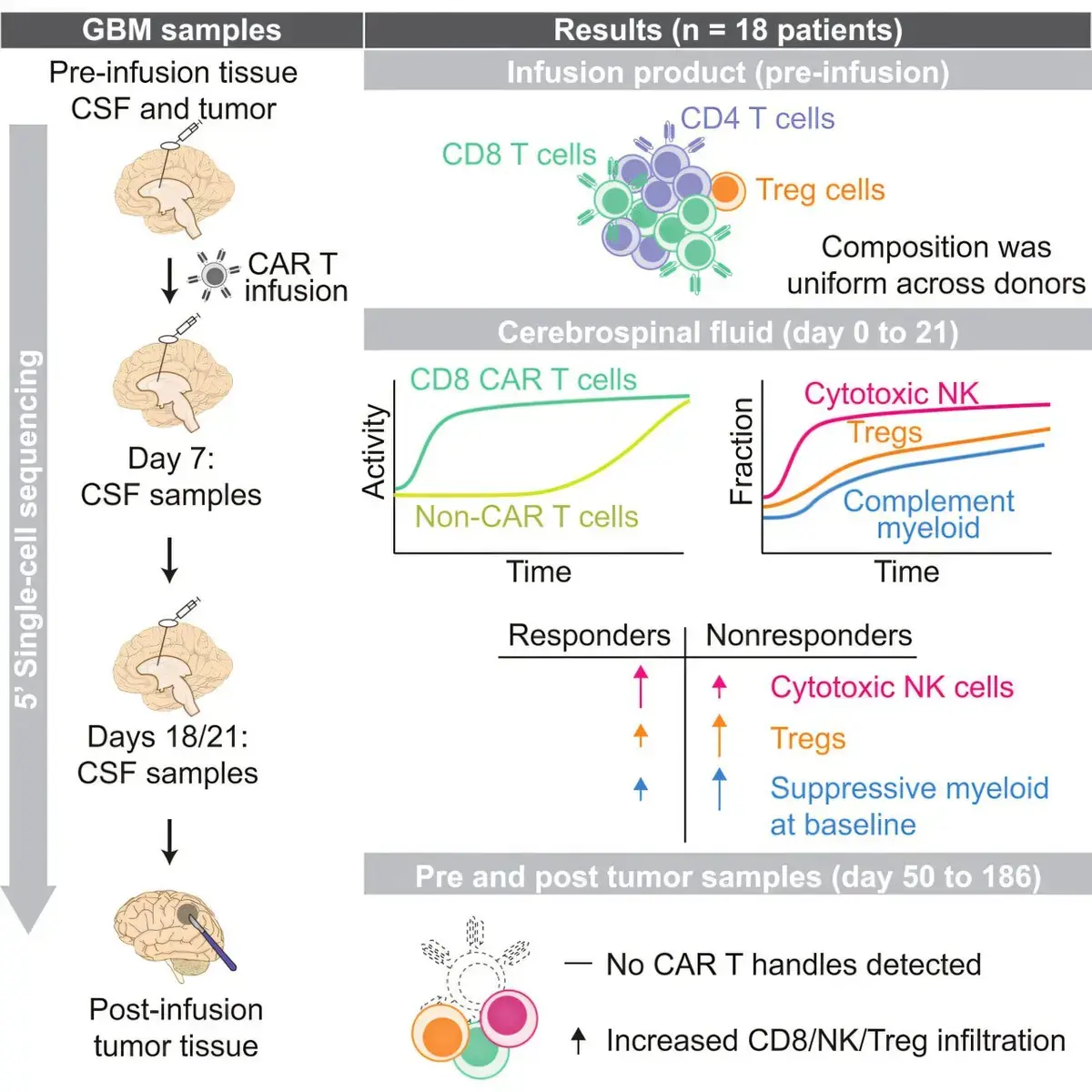
The study's findings suggest that the success of dual-target CAR T-cell therapy depends on the level of immune activation it triggers. When the therapy is effective, it stimulates a strong immune response that helps to eliminate cancer cells. The researchers observed varying levels of immune activation in patients, which correlated with the treatment's efficacy.
The team analyzed data from patients who received the dual-target CAR T-cell therapy, looking for signs of immune activation and cancer cell elimination. They found that patients who responded well to the treatment had higher levels of immune activation, including increased production of cytokines and activation of immune cells.
Frequently Asked Questions
The study's results offer new insights into the potential of CAR T-cell therapy for treating glioblastoma. While the treatment is still in its early stages, the findings suggest that it may be possible to improve its effectiveness by enhancing immune activation. Further research is needed to determine the long-term benefits and potential risks of this approach.
The development of effective treatments for glioblastoma is crucial, given the poor prognosis for patients with this disease. The study's findings offer a promising lead for future research and potential therapeutic applications.
Content written by Marcus Reid for wellness-bio-radar.com editorial team, AI-assisted.